The 2026 Vietnam Tourism Outlook: Investing in High-Value Growth and Luxury Experiences
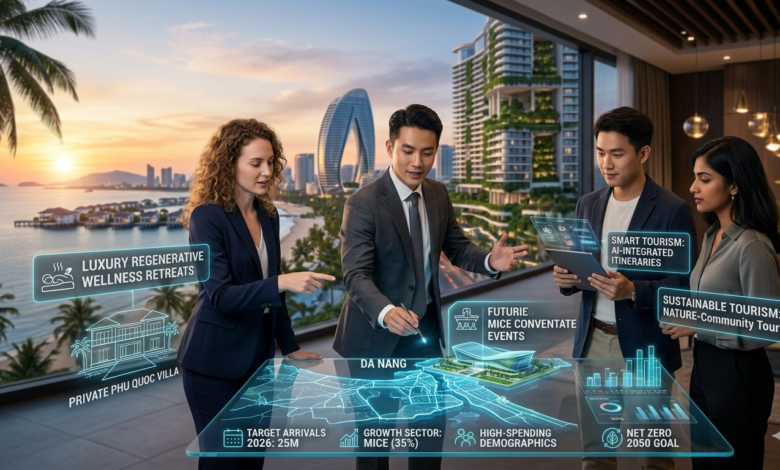
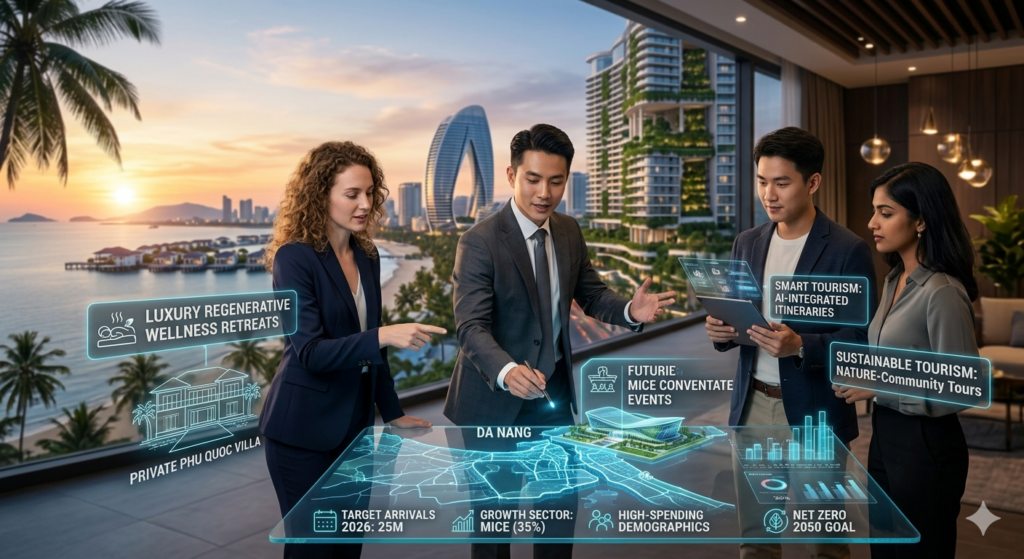
Vietnam’s tourism landscape in 2026 has reached a pivotal milestone, targeting 25 million international arrivals with a strategic shift toward high-spending visitor segments. For global investors and luxury travel providers, the market now offers unprecedented opportunities in specialized niches such as MICE, Regenerative Wellness, and AI-integrated smart tourism.
1. The MICE Powerhouse: Corporate & Incentive Travel
Vietnam has solidified its position as a top-tier destination for MICE (Meetings, Incentives, Conferences, and Exhibitions) in Southeast Asia.
- Infrastructure Synergy: Major hubs like Da Nang, Hanoi, and Ho Chi Minh City have expanded their capacity with high-speed transport links and world-class convention centers.
- Economic Impact: Preferential mechanisms for MICE travelers and streamlined visa policies are driving significant growth in corporate group bookings, making this a high-revenue sector.
2. The Luxury Wellness & Regenerative Retreat Boom
Luxury is no longer just about opulence; in 2026, it is defined by Regenerative Tourism.
- Healing Destinations: Secluded wellness sanctuaries in Phu Quoc, Nha Trang, and Quy Nhon are seeing a 30-45% surge in search volume for premium accommodations.
- Authentic Integration: These retreats combine high-end spa luxury with traditional Vietnamese medicine and holistic Asian healing practices.
- Market Resilience: Affluent demographics from the US, Australia, and India are increasingly prioritizing long-stay wellness programs over generic sightseeing.
3. Sustainable and “Deep Travel” Innovation
Sustainability has moved from a niche preference to a mandatory industry standard.
- Eco-Conscious Trekking: High-altitude landscapes in Sapa and Ha Giang are attracting Gen Z and boutique groups through “Coolcations” and astrotourism.
- Net Zero 2050 Goals: Government policies are actively promoting nature-based community tourism and reducing plastic waste across the hospitality sector.
4. Smart Tourism and AI Personalization
Digital transformation is at the core of the 2026 visitor experience.
- AI Itineraries: Artificial intelligence is now a central tool for crafting personalized, high-intent travel journeys.
- Immersive Tech: Major heritage sites are implementing 3D digital city maps and AR/VR experiences to modernize cultural discovery.